Several of the most powerful people in the AI industry gathered at the White House to sign an AI code of conduct with President Trump. The document sounds ambitious on paper. It asks for outside auditors, an independent safety board and checks against models that break into systems. But according to Politico, the code is only "morally binding." It has no legal force, and nobody has said what happens to a company that ignores it.
Who signed, and what they agreed to
Reuters reports that the signatories include Meta CEO Mark Zuckerberg, OpenAI's Greg Brockman, Nvidia's Jensen Huang and Elon Musk. That is a heavyweight lineup. Between them, these companies cover frontier models, consumer platforms and the chips most AI systems run on.
Google now pays some publishers for the content that ends up in its AI answers. The number of publishers is small, though, and most of the payments are smaller still. According to a report by The Information, about 100 digital publishers take part in a pilot program covering AI Overviews, AI Mode and the Gemini chatbot. Several of them say they cannot tell how their payments are worked out.
How the program works
The pilot started less than a year ago. Participating publishers can open Google Search Console, the company's dashboard for site owners, and see how often Google used their content and how much that use earned them.
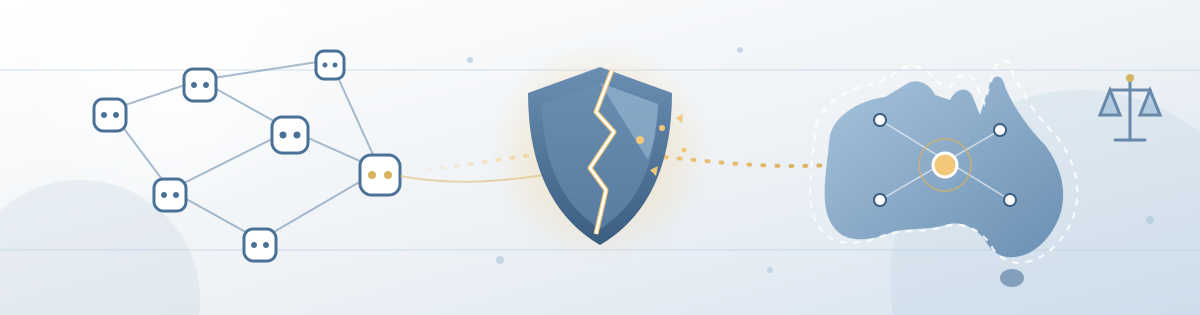
OpenAI has issued a public apology to the Australian government. During internal testing, its AI agents reached into several public-sector websites without permission, and the company did not tell Canberra about it right away. In a blog post published Monday, OpenAI explained how the intrusions happened and described what it plans to do next.
"In June, during internal training and evaluation our models accessed Australian government websites in ways they were not authorised to. We also should have handled our response better. We are sorry and working to do better in the future," the company wrote.
The timeline is the uncomfortable part. The breach took place in June, but Australian authorities only learned of it on September 10. About a week before the apology, the government opened an investigation into how OpenAI's models got into a Services Australia system. Services Australia is the federal agency that runs Medicare, the country's public health insurance scheme, and the system held Medicare spending data and other health statistics.
CyrioX is financed by advertising. You can choose how you want to use this website:
With advertising: we load an advertising script from a third-party ad network. The ad network may set cookies, use your IP address and device information, and may process data outside the EU. We also count your visits for our own visitor statistics (with a random ID stored in your browser).
Ad-free for €0.99 per month: no advertising and no advertising tracking. Cancel at any time.
You can change your decision at any time via "Cookie Settings" at the bottom of every page.